
March 1, 2026
From Business Idea to Digital Reality: Implementing Solutions That Scale
By DevFlares Team
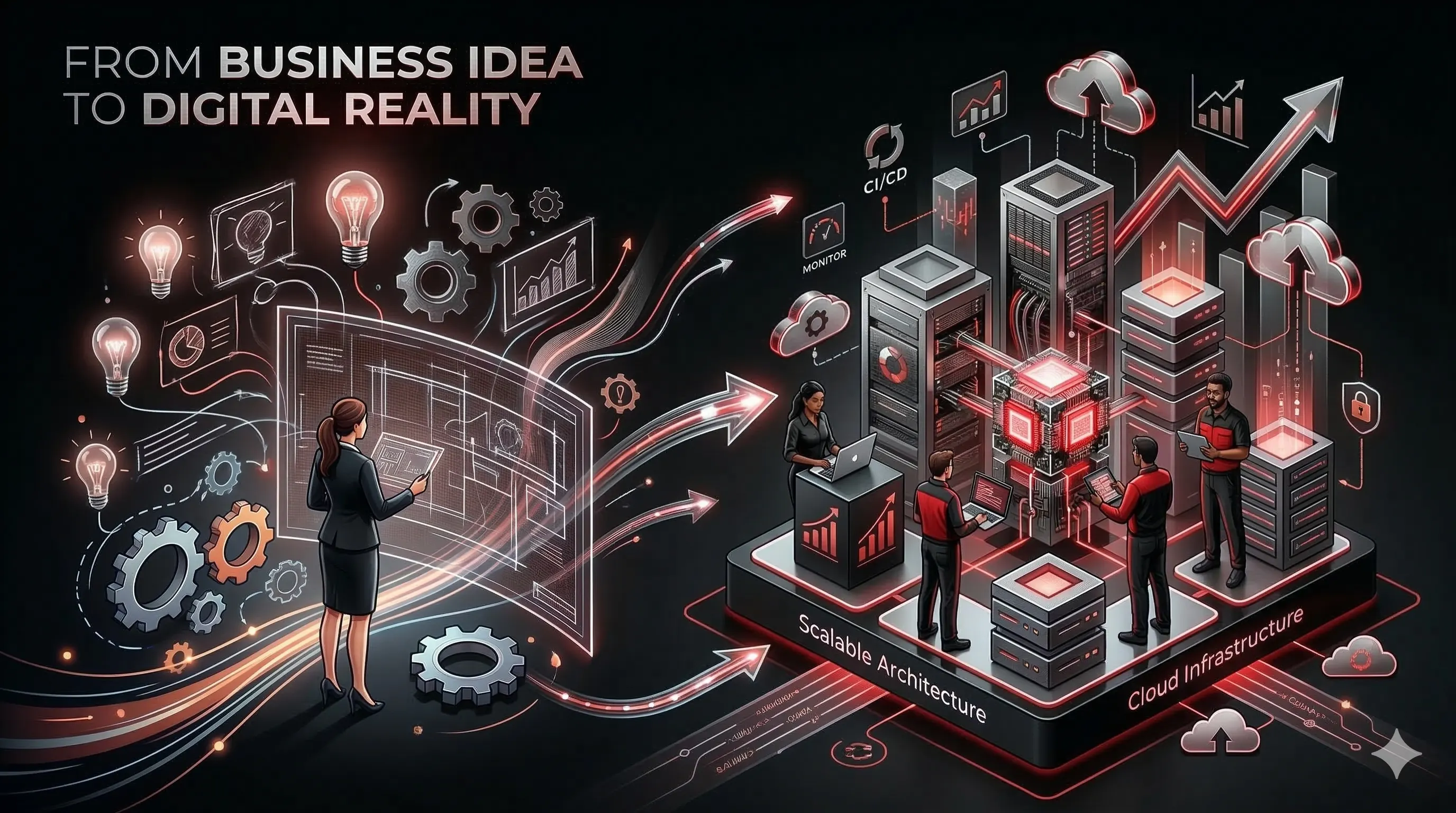
Having a brilliant business concept is only the starting line. The real challenge lies in translating that idea into a stable, high-performing digital product that users love.
Poor initial architecture decisions can haunt a product completely, leading to slow load times, security vulnerabilities, and painful technical debt as the business attempts to grow.
A scalable digital reality requires a foundation built not just for launch day, but for the demands of years two, three, and beyond.
Why this matters now: Users expect flawless digital experiences. If your technical implementation is fragile or slow, competitors with superior engineering will capture your market share, regardless of who had the idea first.
The Gap Between Vision and Execution
Many founders and product leaders struggle with the \"how\" of execution. Translating business requirements into technical specifications requires a deep understanding of modern software paradigms.
It's easy to build a prototype; it's difficult to build a reliable system. A pragmatic engineering approach bridges this gap by prioritizing robust architecture over quick hacks.
Architecting for the Future
Scalable solutions are built on reliable, opinionated stacks. Leveraging technologies like TypeScript and Node.js allows for shared mental models across teams and confident refactoring.
- Use containerization (Docker) to ensure environmental consistency
- Design APIs with scalability and backward compatibility in mind
- Implement strict continuous integration and deployment (CI/CD) pipelines
Deploying to the Cloud Securely
Modern applications require modern hosting strategies. Utilizing cloud providers like AWS or Azure properly means moving beyond simple virtual machines to utilizing managed services, serverless computing, and robust observability tools.
Implementing Observability from Day One
You cannot fix what you cannot measure. Scalable systems require deep observability to identify performance bottlenecks before they impact users.
- Implement centralized, structured logging
- Monitor external API latencies and failure rates
- Establish clear alerting thresholds for critical business workflows
Risks & Guardrails
The biggest risk in implementing new ideas is over-engineering. Building complex microservices for an unproven MVP wastes time and capital.
- Adopt a modular monolith architecture initially to reduce operational overhead
- Focus on clear component boundaries within the codebase
- Prioritize security and data protection over complex infrastructure routing
Practical Rollout Plan
The journey from idea to reality should be iterative. Focus on delivering a core, highly polished feature set to a limited audience before expanding.
- Define the absolute minimum features required for the product to be valuable
- Build a secure, scalable foundation using proven technologies
- Deploy an alpha version to internal stakeholders for rigorous testing
- Launch publicly with active monitoring and a rapid feedback loop
Where DevFlares Helps
DevFlares acts as your engineering-led partner, turning ambitious business ideas into secure, scalable digital products. We bring deep expertise in backend engineering, cloud DevOps, and strict security governance to ensure your product is built to last.
Ready to turn your vision into a robust digital reality? Reach out to our engineering team today.